Unioeste Leads Project to Transform Tilapia Waste into High-Value Collagen
Editor/ Mohamed Shihab
The pioneering research in Brazil turns a byproduct of the Paraná fishing industry into a high-demand ingredient, strengthening the bioeconomy and regional innovation
A research project at the State University of Western Paraná (Unioeste) is at the forefront of innovation, seeking to transform waste from tilapia production into a high-value commercial ingredient: hydrolyzed collagen. Launched in 2025, the initiative focuses on investigating technological pathways for producing collagen from fish skin and scales, with the goal of boosting sustainability and the bioeconomy in the region.
The project is a strategic collaboration that arose from a request by Oestegaard Kontinuer, a local company specializing in equipment for reprocessing animal byproducts. The company seeks to enter the collagen market, a segment with great potential, especially in Brazil, one of the world's largest tilapia producers.
A Solution for an Industry Challenge
Even though Brazil is the world's fourth-largest tilapia producer, with production exceeding 579,000 tons in 2023, the industry faces the challenge of efficiently utilizing its byproducts. Currently, only 30% to 40% of the live weight of tilapia is used for human consumption. The rest, mainly skin and scales, is turned into fishmeal or, in the worst-case scenario, simply discarded. Dr. Mônica Lady Fiorese, the project coordinator, explains that to date, "there are no records of industrial production of collagen or hydrolyzed collagen from the tilapia production chain in the country."
By transforming this waste into a premium ingredient, the research not only promotes the full use of raw materials but also contributes to the circular economy. The global collagen market, with an estimated value of $5.6 billion in 2024, offers a lucrative space for innovative products.
Advantages of Tilapia-Derived Collagen
Collagen extracted from tilapia has significant advantages over traditional sources from bovine and porcine. According to Dr. Fiorese, it is highly biocompatible, has a low risk of zoonosis contamination, and has a molecular structure similar to human collagen, which favors its absorption. Additionally, the product caters to consumers who avoid porcine or bovine ingredients for religious, cultural, or dietary reasons, thus expanding its market potential.
The project, funded by the Ageuni program and supported by the Secretariat of Science, Technology, and Higher Education (Seti), underscores the university's role in solving real problems in the productive sector. The initiative not only fosters applied research at Unioeste but also promotes collaboration among academia, government, and industry.
Research Outlook
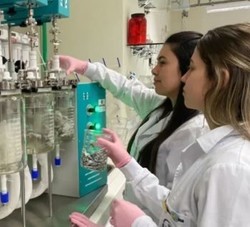
The research is being implemented in phases at the Unioeste laboratory in Toledo, with the goal of defining the ideal conditions for the extraction and processing of collagen. Although still in the initial stages, preliminary results already point to a high potential for scalability and industrial viability.
Vinicius Torquato, director of Oestegaard Kontinuer, states that the project will help Brazil to "move away from commodities" and will place the country at the forefront of technological development. This strategic collaboration not only benefits the company with a new product line but also strengthens the local metalworking industry and fosters job creation in a region vital to Paraná's economy.
[email protected]
www.seafood.media


ساحة النقاش